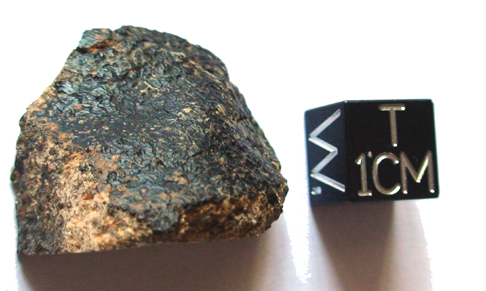
Eucrites
The Eucrites are named for a Greek word meaning "easily
distinguished". Representing the most common class of achondrites,
more than 100 eucrites are known, excluding all probable pairings.
Although they are easily distinguished from chondrites, they closely
resemble terrestrial basalts. Actually, eucrites are extraterrestrial
basalts, volcanic rocks of magmatic origin, representing the crust of
their parent body, Vesta. They are primarily composed of the calcium-poor
pyroxene, pigeonite, and the calcium-rich plagioclase, anorthite.
Additionally, eucrites often contain accessory minerals such as silica,
chromite, troilite, and nickel-iron metal. Based on mineralogical and
chemical differences, the eucrites have been further divided into three
distinct subgroups: the non-cumulate group, the cumulate
group, and the polymict group.
|
Dhofar 007
Found 4 december 1999 in Oman
TKW 21.7 kg
Cumulate Eucrite
|
|
|
|
|
|
|
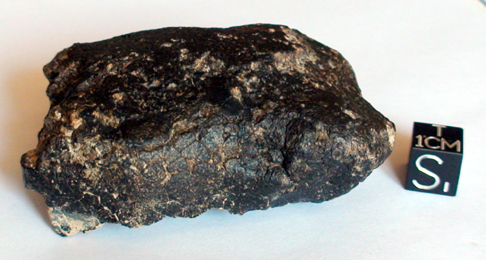
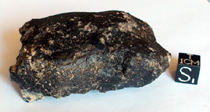
Dhofar007
-00
very nice 2/3 of an individual covered with fusion crust.
134.62gr
SOLD
|
|
|
|
|
|
|
|
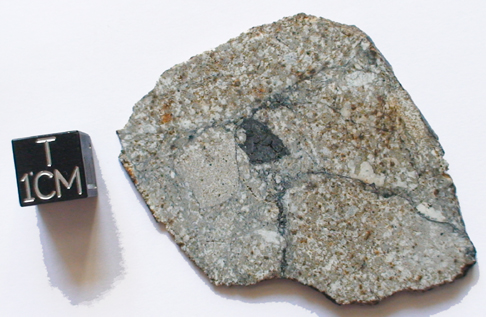
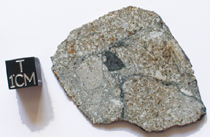
Dhofar007 -01
perfect crusted full slice, has 4 lithologies and
many shock veins
10.56gr
SOLD
|
|
|
|
 |
|
|
|
|
|
|
|
|
|
|
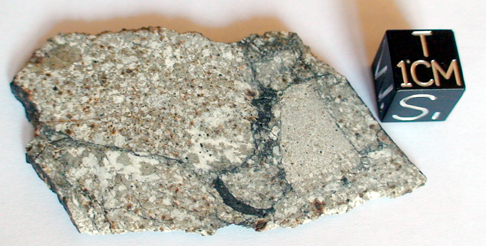
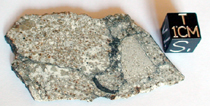
Dhofar007 -02
nice crusted slice,coarse and fine grained lithologies + melts
and shock veins
8.97gr
SOLD
|
|
|
|
|
|
|
|
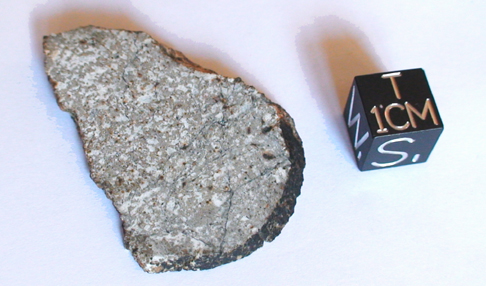
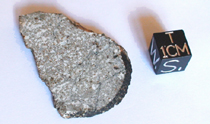
Dhofar007 -03
crusted slice with shock veins
9.04gr
SOLD
|
|
|
|
 |
|
|
|
|
|
|
|
|
|
|
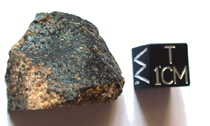
Dhofar007
-04
end cut with two cuts, coarse grained lithology + shock veins
9.95gr
SOLD
|
|
|
|
|
|
|
|
|
|
|
|
|
|
|
|
|
|
|
|
|
|
|
|
|
|
|
|
|
|
|
|
|
|
|
|
|
|
|
|