Shergottites
The shergottites are named for their type specimen, an achondrite that fell
in Shergotty, India, in 1865. Comprising 17 distinct members, they represent
the most abundant type of Martian meteorite. Shergottites are igneous rocks of
volcanic or plutonic origin, and they resemble terrestrial rocks more closely
than do any other achondrite group. They all show exceptionally young
crystallization ages of about 150 to 200 million years, and they usually
exhibit signs of severe shock-metamorphism. Typically, the plagioclase in
shergottites has been converted to maskelynite, a glass that is produced when
plagioclase is subjected to shock pressures of at least 30 GPa. It is likely
that the maskelynite was formed by the impact forces that blasted the
shergottites from the Martian surface and into space. Calculations show that
it requires a major impact event to accelerate any material to a speed high
enough to escape the planet's gravity - one of the reasons why the SNC
meteorites are such a rare class. Based upon their mineral compositions, the
shergottites are further subdivided into two distinct subgroups: the basaltic
subgroup, and the lherzolitic subgroup.
|
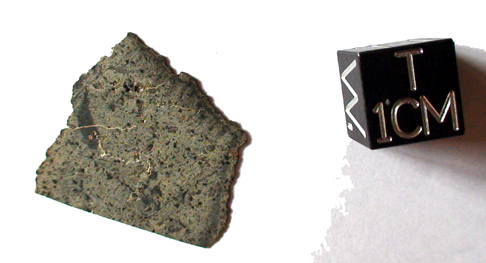
NWA 1068 - Louise
Michel
Found : April 2001, Morocco
TKW : 654 g
Type : picritic shergottite
The shergottites are named for their type specimen, an achondrite that
fell in Shergotty, India, in 1865. Comprising 17 distinct members, they
represent the most abundant type of Martian meteorite. Shergottites are
igneous rocks of volcanic or plutonic origin, and they resemble
terrestrial rocks more closely than do any other achondrite group. They
all show exceptionally young crystallization ages of about 150 to 200
million years, and they usually exhibit signs of severe shock-metamorphism.
Typically, the plagioclase in shergottites has been converted to
maskelynite, a glass that is produced when plagioclase is subjected to
shock pressures of at least 30 GPa. It is likely that the maskelynite was
formed by the impact forces that blasted the shergottites from the Martian
surface and into space. Calculations show that it requires a major impact
event to accelerate any material to a speed high enough to escape the
planet's gravity - one of the reasons why the SNC meteorites are such a
rare class. Based upon their mineral compositions, the shergottites are
further subdivided into two distinct subgroups: the basaltic subgroup, and
the lherzolitic subgroup.
|
|
|
|
|
|
  |
|
|
|
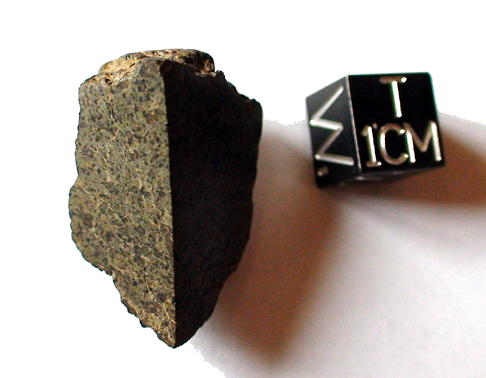
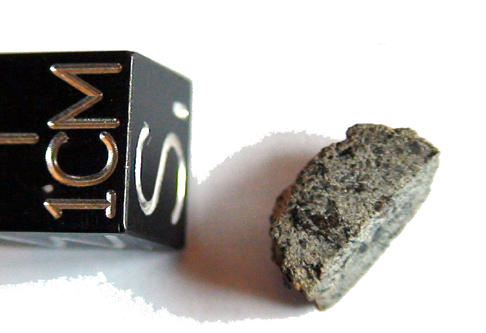
Nwa 1068 02
7.898 gr
Nice endcut for this SNC !
price
on request
|
|
|
|
|
|
|
|
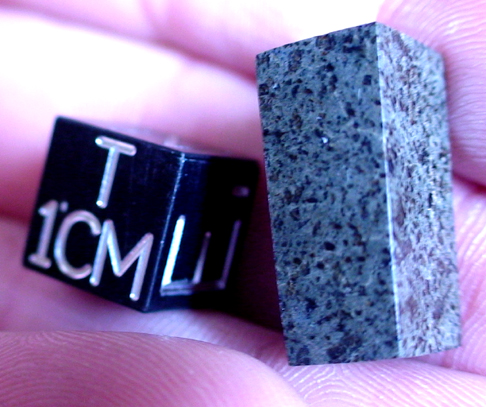
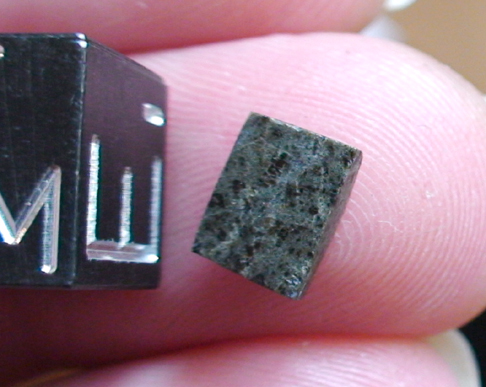
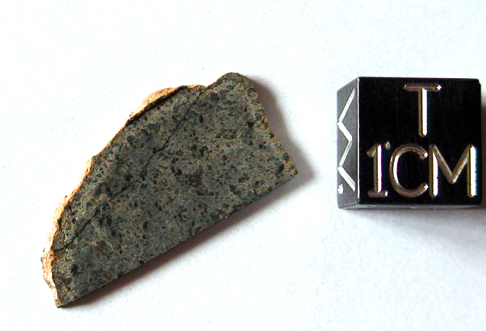
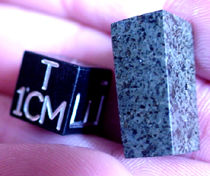
Nwa 1068 03
3.456 gr
Very nice rectangular piece of the Red planet !
SOLD.
|
|
|
|
|
|
|
|
|
|
 |
|
|
|
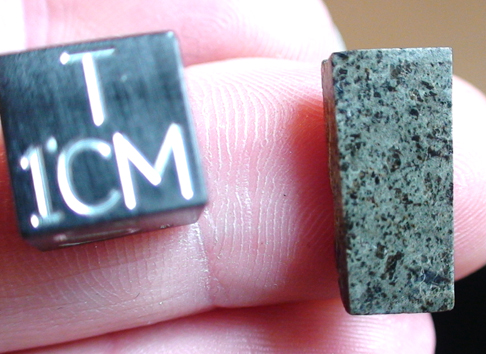
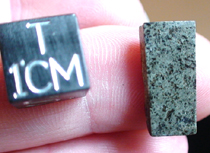
Nwa 1068 04
1.272 gr
Rectangular specimen showing olivines !
SOLD
|
|
|
|
|
|
|
|
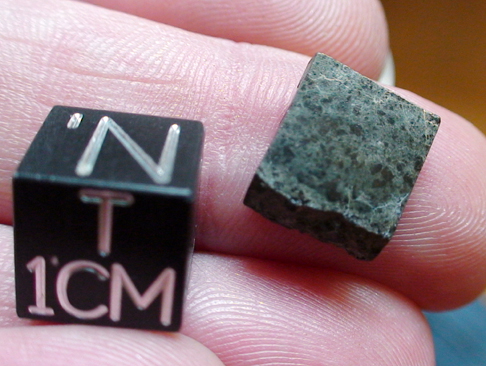
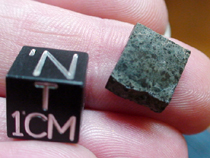
Nwa 1068 05
0.854 gr
A square thick slice with a nice polished
finition
SOLD
|
|
|
|
|
|
|
|
|
|
 |
|
|
|
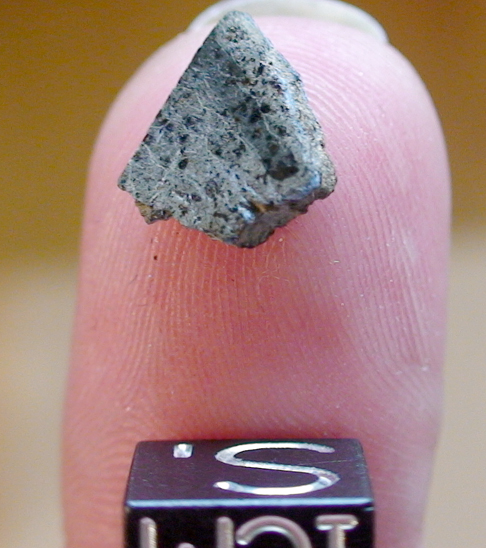
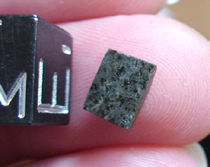
Nwa 1068 06
0.248 gr
A tiny square slice of martian meteorite !
SOLD
|
|
|
|
|
|
|
|
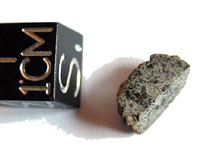
Nwa 1068 07
0.498 gr
A tiny endcut !
SOLD
|
|
|
|
|
|
|
|
|
|
|
 |
|
|
|
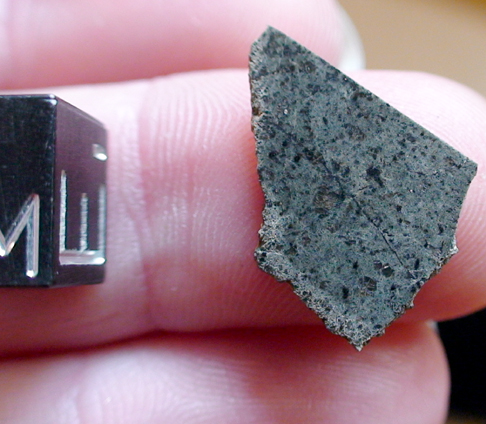
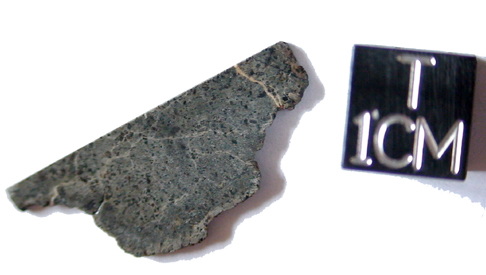
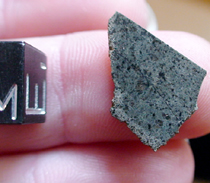
Nwa 1068 08
0.478 gr
A nice and thin slice showing a shock vein
SOLD
|
|
|
|
|
|
|
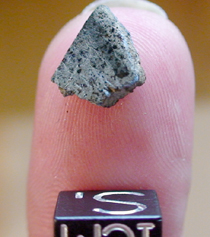
Nwa 1068 09
0.292 gr
Nice and thick slice
SOLD
|
|
|
|
|
|
|
|
|
|
 |
|
|
|
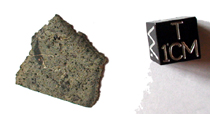
Nwa 1068 10
0.370 gr
Nice and extremely thin slice, less than a millimeter
thick !
SOLD
|
|
|
|
|
|
|
Nwa 1068 11
0.686 gr
Nice and thin slice with an outside part !
SOLD
|
|
|
|
|
|
|
|
|
|
 |
|
|
|
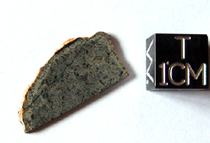
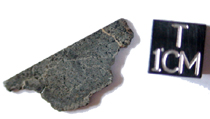
Nwa 1068 12
0.850 gr
Nice and thin slice of shergottite
SOLD
|
|
|
|
|
|
|
|